
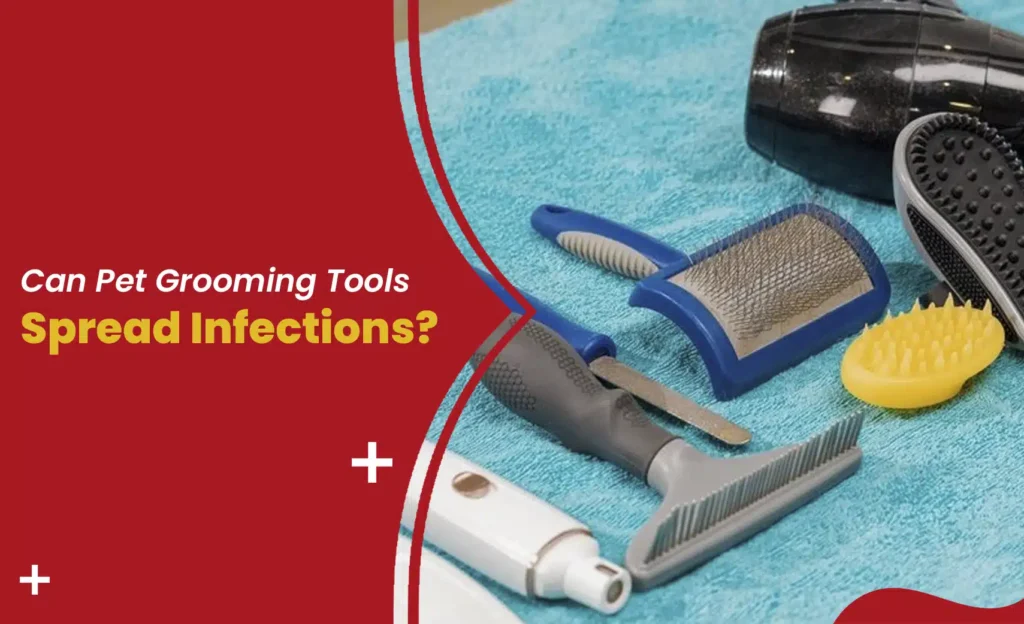
The first time this question crossed my mind wasn’t in a clinic or a lab. It was in a friend’s living room, watching her absent-mindedly use the same slicker brush on two dogs, then toss it back into a drawer already full of half-used combs and nail clippers. No disinfectant. No second thought.
It made me pause.
We obsess over washing our hands, but grooming tools? Brushes, trimmers, deshedding combs? They often escape scrutiny. Yet these tools move from fur to skin, sometimes breaking the surface without us realizing it. And once that barrier is compromised, infections don’t need an invitation.
Veterinary dermatologists have been raising concerns for years about shared grooming equipment. It mirrors what we see in human settings too – salons, gyms, even shared bathrooms. We covered this broader pattern earlier in Common Household Habits That Quietly Spread Infections, and pet grooming fits squarely into that picture.
What makes grooming tools particularly risky is time. Parasites, bacteria, and fungal spores don’t always die quickly. Some can linger far longer than people expect. If you’ve ever wondered how long pathogens can hang around on everyday objects, the same logic applies here, something we explored while looking into How Long Parasites Can Survive on Brushes, Combs, and Fabrics.
When It’s Not Just Dirt
Most people assume redness or itching after grooming is just irritation. And sometimes it is. But sometimes it’s not.
Mites, worms, and skin-borne parasites don’t care whether exposure came from a dirty kennel floor or a poorly cleaned brush. Once they transfer, symptoms can be subtle. Mild itching. Slight rash. Maybe nothing at all at first. This is why skin conditions like scabies are so often misdiagnosed early on, a confusion we broke down in Scabies vs Eczema: Why They’re Often Confused.
Pet owners are especially vulnerable because many parasites don’t respect species boundaries. Zoonotic transmission sounds technical, but in plain terms, it means some infections don’t stop at your pet. That concern comes up again when discussing Can You Catch Scabies or Parasites From Cats or Dogs?, and the answer is uncomfortable but honest: yes, in certain situations.
Reinfection Is the Part Nobody Talks About
Even when treatment works, reinfection remains the quiet villain. I’ve spoken with people who swore a medication didn’t work, only to discover they kept using the same uncleaned grooming tools throughout treatment.
This pattern shows up repeatedly in parasitic disease management. You treat the body, but forget the environment. That’s why clinicians emphasize understanding How Parasitic Infections Spread Inside the Home, because pills alone don’t solve exposure loops.
In some cases, medications like Fensafe 222 mg are prescribed to address parasitic infections when clinically appropriate, especially where worm-related exposure is suspected. But treatment success depends on breaking the cycle. Reusing contaminated tools undermines that effort. Fensafe 222 mg can do its job, but only if the surroundings cooperate. This is why doctors also stress environmental hygiene alongside medications like Fensafe 222 mg, rather than treating it as a standalone fix.
The Grooming Drawer Nobody Cleans
Think about where grooming tools live. Drawers. Bins. Bags. Rarely disinfected. Often damp.
Parasites thrive in neglect. That’s not fear-mongering; it’s biology. Studies on survival times show that some organisms persist long enough to trigger repeat infections, something that becomes clearer when reading about Can You Get Reinfected by the Same Parasite Again?
Pet owners often ask if routine deworming solves this problem entirely. Deworming helps, but it isn’t a magic shield. This comes up frequently when discussing Pet Deworming Schedules and What Vets Actually Recommend, because timing, hygiene, and exposure all matter.
In clinical settings, medications such as Fensafe 222 mg may be part of a structured treatment plan, but they’re never meant to replace sanitation. That distinction matters more than most people realize.
When Symptoms Appear Somewhere Else
One detail that often surprises people is where symptoms show up. A parasite picked up through a grooming tool doesn’t always stay on the skin. Some migrate internally. Others trigger immune responses far from the original contact point.
We’ve seen this happen in cases that later align with what’s described in From Skin to Gut: How Parasites Travel Through the Body. It’s unsettling, but it explains why vague symptoms – fatigue, stomach issues, even mood changes – sometimes trace back to overlooked exposure.
In those situations, clinicians may again consider options like Fensafe 222 mg as part of treatment, depending on diagnosis and parasite type. Still, they’ll almost always ask the same follow-up question: were grooming tools cleaned?
The Overconfidence Trap
There’s a dangerous confidence in thinking, “My pet looks fine.” Many infections don’t announce themselves loudly. They whisper.
This is why healthcare professionals warn against casual self-treatment. The risks of guessing wrong are well documented, especially in Why Self-Medicating for Parasites Can Be Risky. Medications like Fensafe 222 mg should never be taken casually or without understanding exposure sources.
And yet, people keep repeating the same mistakes. They treat symptoms but not habits. They clean the pet but not the tools. They take medication but ignore reinfection risks. Fensafe 222 mg can be effective when used correctly, but its success hinges on behavior change as much as chemistry.
So, Can Grooming Tools Spread Infections?
Yes. Quietly. Efficiently. Often unnoticed.
They sit at the intersection of touch, skin, and neglect. That makes them perfect carriers if hygiene slips. Whether you’re dealing with parasites, mites, or bacterial infections, grooming tools deserve the same attention you give hands, bedding, and surfaces.
And if treatment becomes necessary, whether it involves Fensafe 222 mg or another medically appropriate option, remember this: medicine treats the body. Hygiene protects the future.
FAQs
- Can pet grooming tools really spread infections to humans?
It sounds dramatic until you think about it. Grooming tools scrape along skin, pull hair from the roots, and sometimes nick the surface without anyone noticing. If bacteria, mites, or parasite eggs land there, they don’t magically disappear. So no, it’s not overblown – it’s just something most of us don’t think about until there’s a problem. - What kinds of infections are most commonly linked to grooming tools?
Skin infections are the most common – things like fungal infections, mites, and scabies-like conditions. In some cases, parasites can also spread indirectly if eggs or larvae survive on brushes, clippers, or combs long enough to come into contact with human skin. - How often should pet grooming tools be cleaned or disinfected?
Ideally, after every use. At the very least, tools should be thoroughly cleaned and disinfected weekly if used regularly. Tools that break the skin, like nail clippers or trimmers, should never be reused without proper sanitation. - Can I get reinfected even after treatment if tools aren’t cleaned?
Absolutely. This is one of the most overlooked reasons treatments fail. Even effective medications won’t prevent reinfection if contaminated tools, bedding, or surfaces remain in use. Treating the environment is just as important as treating the body. - Are shared grooming tools riskier than personal ones?
Don’t put used grooming tools straight back where they came from. Rinse them, disinfect them, let them dry fully. That small pause – those extra few minutes – can be the difference between staying healthy and dealing with a stubborn infection later.