
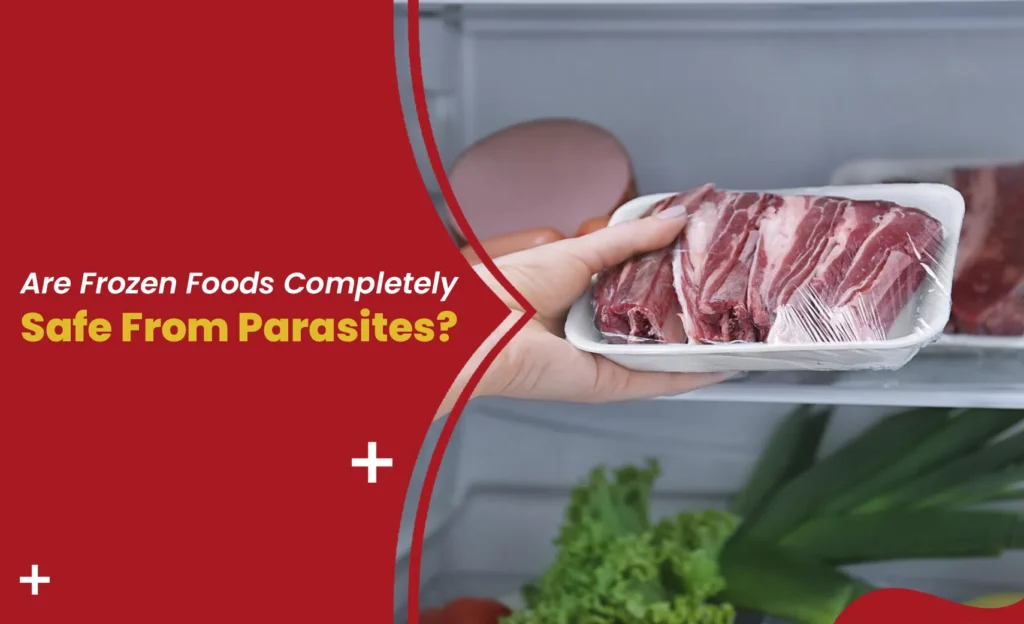
A few years ago, I stood in my kitchen staring at a packet of frozen fish fillets, wondering something I’d never really questioned before.
If freezing kills bacteria… does it kill parasites too?
It’s an oddly unsettling thought once it lands. We trust frozen food almost blindly. It feels clean. Controlled. Industrial. Safe in a way raw food sometimes doesn’t. And yet, every now and then, a headline pops up about parasites found in fish, meat, or produce – sometimes frozen, sometimes not.
So what’s the truth here? Does freezing actually protect us from parasites, or does it just make us feel better?
The answer, like most things in public health, is more complicated than the freezer aisle would have you believe.
Why parasites and food safety still matter in modern kitchens
Parasites have an old reputation. Medieval problem. Developing-world issue. Something solved by modern sanitation and stainless-steel processing plants.
But parasites didn’t get the memo.
Even in the US and UK, foodborne parasites still show up – especially through seafood, undercooked meat, and imported foods. Most cases aren’t dramatic. No movie-style horror. Just stomach pain that won’t quit. Fatigue. Nausea that lingers. Skin symptoms that don’t quite make sense.
And sometimes, the common link is frozen food.
That’s not fear-mongering. It’s just biology.
What freezing actually does – and what it doesn’t
Freezing slows life down. It doesn’t necessarily end it.
Bacteria often become inactive at freezing temperatures. Many parasites, however, are tougher than we give them credit for. Some larvae and eggs can survive freezing, especially if the temperature isn’t cold enough or the food isn’t frozen long enough.
Commercial flash-freezing is far more effective than your home freezer. Industrial systems reach lower temperatures faster, which is why frozen seafood sold for raw consumption – like sushi-grade fish – is usually frozen under strict guidelines.
But here’s the thing most people miss: not all frozen foods are frozen the same way, and not all parasites respond the same way to cold.
Seafood: where the confusion usually starts
Fish is the poster child for parasite anxiety, and not without reason. Certain parasites naturally exist in marine life. When fish is eaten raw or lightly cooked, those parasites can survive long enough to cause infection.
Freezing can kill many of them. But only under specific conditions – temperature, duration, and handling all matter.
I’ve interviewed food safety experts who say the problem isn’t frozen fish itself. It’s assumptions. People see “frozen” and mentally skip safety steps they’d never skip with fresh food.
Frozen doesn’t mean invincible.
Meat, frozen dinners, and quiet risks
Frozen meat and ready-made meals feel safer, mostly because they’re processed. And generally, they are safer than raw alternatives. But again – safe doesn’t mean impossible.
If meat was contaminated before freezing, and if parasites survived the cold, improper cooking can still allow infection. Freezing pauses the problem. Cooking ends it.
That distinction matters more than we like to admit.
When symptoms don’t point back to the freezer
One of the trickiest things about parasitic infections is that symptoms rarely scream their origin.
A person eats frozen food on Monday. Gets symptoms two weeks later. By then, the freezer is the last thing on their mind.
Doctors often see patients with vague digestive complaints and no clear trigger. That’s when antiparasitic treatments sometimes enter the conversation, including medications like Iverheal 6mg, depending on the organism involved.
And yes – Iverheal 6mg is used in specific parasitic infections, not as a casual fix, but as part of targeted medical care when exposure is suspected.
The myth of “freezing equals sterilizing”
Freezing is preservation, not purification.
It doesn’t wash away contamination. It doesn’t neutralize everything living in food. It simply slows biological processes.
This is why public health guidelines still emphasize cooking temperatures, even for frozen foods. It’s also why people who assume frozen equals sterile are sometimes surprised when doctors ask detailed questions about diet history.
Parasites don’t care how neat your freezer is.
Real-life patterns doctors notice
Clinicians who deal with parasitic infections often notice something interesting. Patients aren’t reckless eaters. They’re not ignoring hygiene. Many are health-conscious, even cautious.
They buy frozen fish because they think it’s safer. They trust frozen produce because it’s convenient and “clean.”
When treatment becomes necessary – sometimes involving medications such as Iverheal 6mg – the bigger issue isn’t blame. It’s awareness. Understanding that food safety isn’t binary.
Why freezing helps – but shouldn’t replace cooking
Freezing reduces risk. No question. It lowers parasite activity and can kill certain organisms when done properly.
But cooking remains the gold standard.
Heat destroys parasites in a way cold often can’t guarantee. That’s why food safety authorities consistently emphasize internal cooking temperatures, regardless of whether food was frozen beforehand.
Frozen food is a layer of protection. Not a force field.
Personal observation from years of reporting
After years of covering health stories, I’ve noticed a pattern. People want certainty. A single rule. Something like: “Frozen food is safe. End of story.”
But biology doesn’t work that way.
The most reliable safety habits are layered. Freezing plus proper cooking. Reputable sourcing plus hygiene. Awareness plus restraint.
And when something does go wrong – because sometimes it does – modern medicine steps in. In some parasitic infections, doctors may prescribe Iverheal 6mg as part of treatment, depending on diagnosis and medical history.
That doesn’t mean frozen food is dangerous. It means food safety is a system, not a switch.
Imported foods and long supply chains
Global food systems add another wrinkle. Frozen foods often travel long distances. Different countries. Different standards. Different handling practices.
Most of the time, this works fine. Occasionally, gaps appear.
This is why regulators focus so heavily on inspection, freezing protocols, and labeling. And why health professionals still see cases linked to foods that were technically “safe.”
When symptoms persist and tests confirm parasitic infection, treatment options – including Iverheal 6mg – may be considered under medical supervision.
So… should frozen food scare you?
No. Fear isn’t useful here.
Frozen food is generally safe, often safer than fresh in some contexts. It reduces bacterial growth, extends shelf life, and supports food security.
But it’s not magic.
Understanding its limits is what keeps it safe.
The quiet role of prevention
Most parasitic infections never happen because people cook food properly. They wash hands. They don’t cut corners consistently.
The cases that do occur often sit at the intersection of assumptions and small mistakes.
A slightly undercooked frozen fillet. A microwave dinner not heated evenly. A belief that “it’s frozen, so it’s fine.”
And when prevention fails, treatment follows. Sometimes that treatment includes Iverheal 6mg, used appropriately, carefully, and for the right reasons.
Final thoughts, without the alarmism
Frozen food is one of modern life’s quiet successes. It feeds millions safely every day.
But it’s not a guarantee against parasites.
It’s a tool. A good one. Just not a standalone solution.
Cook thoroughly. Handle carefully. Stay informed. And if symptoms don’t make sense – or don’t go away – don’t dismiss them.
Medicine exists for a reason. So does caution.
And somewhere between the freezer and the frying pan is where real food safety lives – messy, human, and very much worth paying attention to.
When necessary, treatments like Iverheal 6mg remind us that parasites still exist – but so does knowledge, prevention, and effective care.
FAQs
1. If frozen food isn’t 100% safe, should I stop eating it?
No – and honestly, that fear would do more harm than good. Frozen food is generally very safe and, in many cases, safer than fresh food that’s been sitting around too long. The point isn’t to avoid frozen food; it’s to avoid blind trust. Freezing helps, but it doesn’t replace proper cooking or basic food-handling habits.
2. Why do parasites survive freezing when bacteria don’t?
Because parasites are built differently. Some form hardy eggs or larvae that are designed to survive harsh conditions – cold, dryness, time. Freezing slows them down, sometimes kills them, but not always. It’s less about the freezer being “bad” and more about biology being stubborn.
3. How would I even know if a frozen food caused a parasitic infection?
That’s the frustrating part – you usually don’t. Symptoms often show up days or weeks later, long after the food is gone and forgotten. By then, it just feels like unexplained stomach issues, fatigue, or skin problems. Doctors look at patterns, not just one meal, when trying to figure it out.
4. If I do get a parasite, does that mean my kitchen hygiene failed?
Not necessarily. This isn’t a moral failure or a cleanliness issue. Many infections happen despite reasonable care. Parasites don’t need chaos – they only need a small opening. That’s why food safety advice focuses on reducing risk, not achieving perfection.
5. When should I stop waiting it out and talk to a doctor?
If symptoms linger, worsen, or don’t match anything familiar, it’s worth getting checked. Especially if digestive issues, unexplained itching, or fatigue just won’t go away. Most people wait longer than they should, hoping it’ll resolve on its own. Sometimes it does. Sometimes it doesn’t – and that’s okay to admit.