
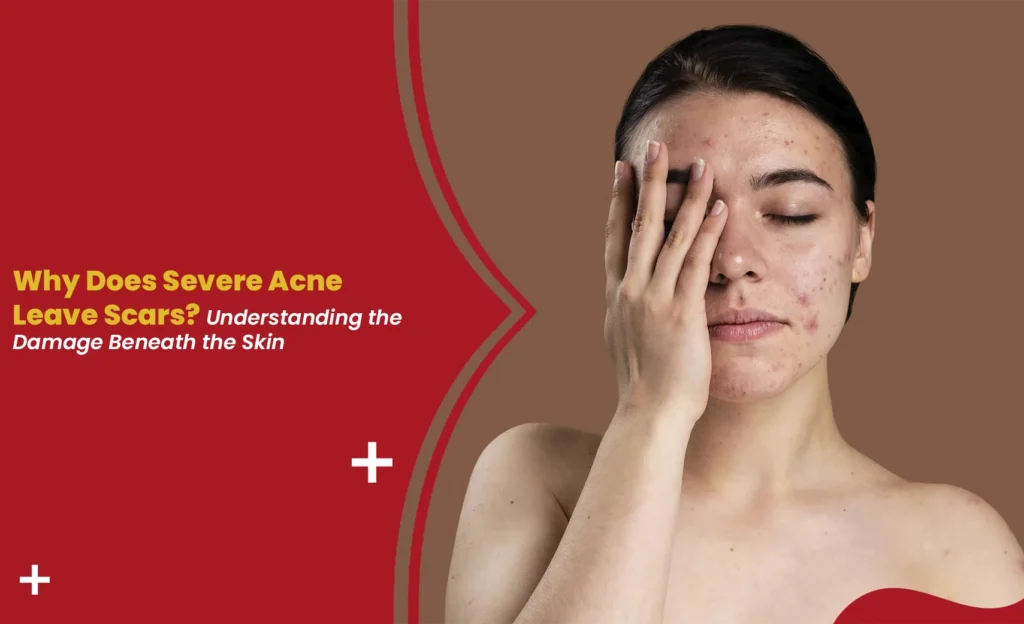
Severe acne rarely really ends the moment that last little pimple goes away, and a lot of people find out the hard way that the “after” part is the loudest. The marks, pits, and weird uneven skin texture just stay there, like they were waiting for you to relax. So yeah, figuring out why this happens is the first step, before you start trying to hide it or “fix” it with random stuff.
The Root of the Problem: Why Breakouts Get Out of Hand
If you’re asking what causes severe acne, it’s usually not one single thing. It’s more like several factors, working together in a messy way. Hormonal activity, especially androgens, tells the oil glands to make more sebum. That oily mix hangs out with dead skin cells and clogs pores, and then Cutibacterium acnes, the skin bacterium, multiplies in that blocked space. After that, the immune system steps in with strong inflammation, and things get worse.
Genetics also matter a lot, so severe acne tends to run in families, sometimes pretty clearly. Other contributors can include hormone shifts, certain medications, and, for some people, high-glycemic diets.

How Inflammation Turns Into Permanent Marks
Your skin has its own repair routine; it’s sort of a delicate process. When a deep lesion ruptures, the follicle wall breaks and spills its contents into the surrounding tissue. Then the body reacts fast with inflammation, and later it builds new collagen to patch things up.
Cystic acne scarring happens a lot because those lesions are big and sore, and they go down deep into the dermis. During repair, if the body makes too little collagen, the skin can sink in. If it makes too much collagen, the tissue can rise instead. Also, the longer a painful, inflamed spot stays active, and the more it gets picked or squeezed, the more damage stacks up and creates severe acne.
Recognizing the Different Patterns of Scarring
Dermatologists show various types of acne scars, and knowing which one you have is important because each one responds differently to treatment.
Atrophic acne scars are the most common, meaning there’s tissue loss. They include:
- Icepick scars: narrow, deep pits with sharp edges
- Boxcar scars: wider, round, or oval depressions, with clearer defined borders
- Rolling scars: shallow dips that look wavy, giving the skin an uneven, “rolling” look
Moreover, not everyone with “scars” has texture changes. Many people get post-inflammatory marks too. Those are flat red or brown spots, and they are not the same as texture scarring, and they usually fade over time.
Also, acne scars on face can feel extra upsetting because they’re the most visible, and direct light makes them show up more. That’s also why they can look worse in photos than they do in real life, at least sometimes.
Can the Damage Fade on Its Own?
A lot of people want to know “are acne scars permanent?” The real answer is, it depends on the type. Flat discolouration often gets better over a few months. True textural scars, especially atrophic acne scars, are structural changes in the skin, so they generally don’t just disappear without professional help. Still, they can usually improve a lot with the right approach.
And this is where timing matters a lot. Every new deep breakout adds another chance for another scar, so it’s usually smarter to control the underlying acne first, not only chase cosmetic solutions.
Stopping New Scars at the Source
If someone asks how to get rid of acne scars, it helps to understand this: treating scars while severe acne is still active is like mopping the floor with the faucet still running. Things keep getting wet again.
Over-the-counter options like benzoyl peroxide, salicylic acid, and topical retinoids can help with mild breakouts, but they often don’t fully handle deep nodular or cystic acne.
When antibiotics, topicals, and hormonal therapies don’t work, dermatologists may recommend isotretinoin, a vitamin A derivative. In the case of severe acne treatment, it’s widely seen as one of the most effective choices, because it works across oil production, clogged pores, bacteria, and inflammation at the same time.
A Medical Solution
Saferet 30 mg has isotretinoin in it. Basically, it shrinks the sebaceous glands, so oil output drops a lot. when that happens, the skin environment changes, bacteria cannot so easily thrive, and inflammation down in the skin calms down too. In the end, it helps reduce the number of fresh spots, those that might otherwise turn into scars later on.
Most people notice clearer skin within a few months, and a typical course is around four to six months, although your healthcare provider decides what fits best. Dosing is based on body weight and how your skin responds, so the 30 mg strength is selected by a dermatologist, not you. Some people also get a short temporary flare during the first few weeks before things start improving.
Before you begin, there are a few important points you really should know:
- The Saferet 30 mg capsule should be taken only with a dermatologist’s guidance, and that usually means blood tests for liver function and lipids before starting and then during treatment too.
- Dry lips, dry skin, and dry eyes are extremely common, so a moisturizer, a lip balm, and sunscreen are your daily companions.
- It’s uncommon, but low mood, an unusual behavior, or other mental health shifts should be reported to your healthcare provider promptly.
- Food helps absorption, so your clinician will tell you when to take it.
If it’s used correctly, Saferet 30 mg capsule can give many people the best shot at long-lasting control of severe acne, and that helps protect the skin from further scarring.
Choosing the Right Care for Existing Scars
When acne is controlled, you can turn your focus toward repair. The best treatment for acne scars depends on scar type, depth, and skin tone. Most of the time, people get better outcomes from mixing more than one approach:
- Microneedling: encourages collagen build-up to soften rolling and shallow boxcar scars
- Chemical peels: boost texture and reduce discolouration, and TCA CROSS is used for icepick scars
- Laser resurfacing: fractional lasers help remodel scar tissue, and they work well for many atrophic acne scars
- Subcision: loosens fibrous bands that pull rolling scars down
- Dermal fillers: can lift certain depressed scars for a time
- Punch techniques: remove or repair deep stubborn scars
Dermatologists often wait a few months after finishing isotretinoin before they start procedures like lasers or deeper resurfacing, so do ask your healthcare provider about the right timing for you.
Protecting Your Skin Along the Way
While you’re working with a professional, small habits still matter a lot. Don’t pick or pop active lesions, because that pushes inflammation deeper and can raise the chance of scarring. Use broad-spectrum sunscreen every single day, since UV exposure can darken marks and slow healing. Stick with gentle, non-comedogenic skincare, and get advice early instead of waiting for breakouts to calm down on their own.
Summing Up
Severe acne scars happen because deep inflammation can disrupt the collagen structure underneath the skin, and the body’s repair is not always perfect. so the best plan is to treat active acne early and strongly, then deal with existing marks using targeted procedures. If you have moderate to severe acne and it’s not improving with standard care, talk to a dermatologist about whether Saferet 30 mg capsule makes sense for you. The sooner breakouts get under control, the fewer scars you may need to treat later.
FAQs
1. What is severe acne?
This is a painful inflammatory skin condition. It has deep lesions. It spreads extensively across the face and other body parts.
2. Can toothpaste help acne?
No, toothpaste does not help to cure acne. It may deliver a negative impact on your skin.
3. Is inflammation deeper regarding acne?
In moderate to severe acne, the inflammation is deeper, not just sitting on the surface, and that depth is basically what sets up the chances of scarring.
4. What are hypertrophic and keloid scars?
Hypertrophic and keloid scars are raised, and they happen when there’s excess collagen. These show up more often on the chest and back.
5. Do pregnant women take Isotretinoin?
No. Isotretinoin can lead to serious birth defects, so anyone who could become pregnant needs dependable contraception and pregnancy tests exactly as their healthcare providers direct.