
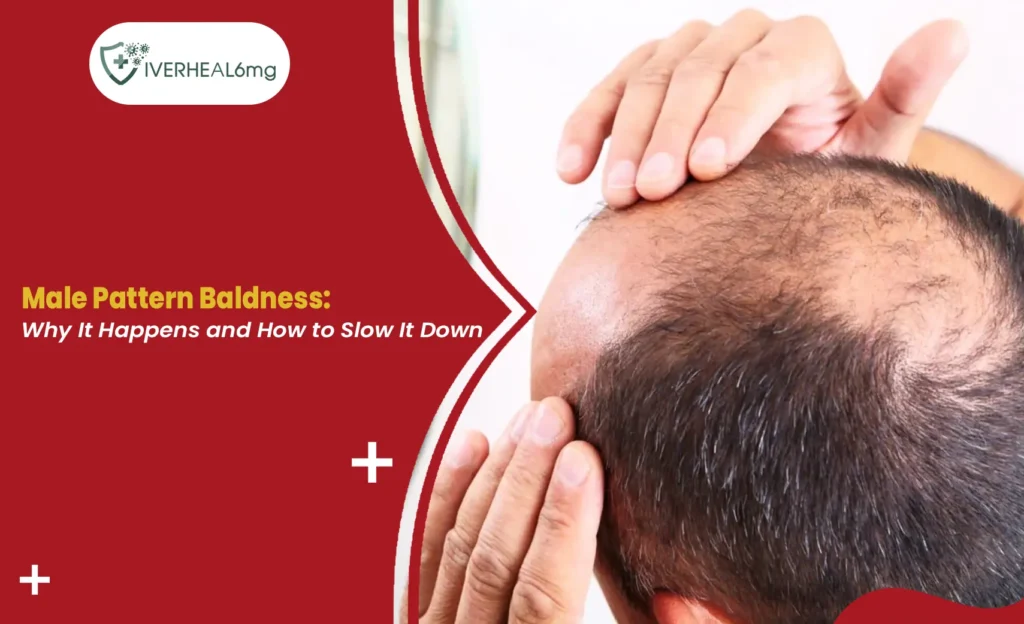
A few things throw a man off, like staring at the shower drain and seeing more hair there than you remember, or then later, checking an old pic and noticing that hairline is slowly edging back, under the radar. When does male pattern baldness start? Male pattern baldness happens to around half of men by the time they hit 50, so yeah, it is the most common way people lose hair. It’s also predictable and gradual, and honestly, it can be managed if you figure out what is pushing it along.
The Biology Behind Your Receding Hairline
So if you’re asking what causes male pattern baldness, it’s basically two major players, genetics and hormones. In medical language, it’s androgenetic alopecia male pattern baldness, which is hair loss that gets triggered by androgens (male hormones) in folks who are genetically set up for it. And no, it’s not just from your mother’s father, that old claim people repeat…you can inherit follicle sensitivity from either side of your family. The hairs that come out next are thinner, shorter, and lighter, until eventually the follicle basically stops producing visible hair.

The Hormonal Link: DHT Explained
Male pattern baldness and testosterone are linked, but not the way most people imagine it. You won’t go bald because your testosterone is high. The actual problem is dihydrotestosterone, usually called DHT. Testosterone gets converted into DHT by an enzyme, 5-alpha reductase, and in follicles that are extra sensitive, DHT attaches to receptors and slowly miniaturizes the follicles.
That’s why two guys can have the same testosterone levels; one looks fine and keeps a full head of hair, while the other sees more recession over time. The difference comes down to how reactive their follicles are to DHT. This is also why solid treatments focus on DHT, not just testosterone itself.
Recognizing the Early Signs
A lot of men wonder when male pattern baldness really starts. Usually it shows up in the late 20s to early 30s, but some notice thinning earlier, like late teens or early twenties. Early signs can look like this:
- a hairline drifting back at the temples, giving that “M” shaped vibe
- thinning at the crown, or vertex
- hair that feels finer and softer than before
- extra shedding that doesn’t really calm down
Also, the sooner it begins, the more intense it often becomes, so early steps matter.
Is It Alopecia or Pattern Baldness?
People search on Google for alopecia vs male pattern baldness a lot, but they are not interchangeable words. “Alopecia” is the big medical umbrella for hair loss, and it covers different conditions. Alopecia areata is one example, an autoimmune situation that can cause sudden, round bald patches. Telogen effluvium is another; it’s temporary shedding that can be triggered by stress, sickness, or nutrient shortages. If your hair loss shows up fast, in patchy areas, or comes with itching, redness, or scaling, then it’s smart to see a dermatologist because it probably isn’t classic pattern baldness.
What You Can Do to Slow the Loss
If you’re trying to learn how to prevent male pattern baldness, the truth is you can’t really rewrite your genes. But you can reduce things that speed up the process, and you can act before the damage becomes permanent. Things that help include:
- Eat a balanced diet. You have to consume protein, iron, zinc, and vitamin D-rich foods for healthy hair growth.
- Manage stress. Stress itself doesn’t “cause” pattern baldness, but it can worsen shedding.
- Be kind to your scalp. Skip tight hairstyles, harsh chemicals, and too much heat.
- Get a proper diagnosis early. A dermatologist can confirm the cause and help you act before follicles go dormant.
Lifestyle habits support hair health, but they won’t fully stop a hormonally driven process by themselves.
Can Hair Loss Be Reversed Naturally?
A lot of men search for how to reverse male pattern baldness naturally. Scalp massage, rosemary oil, saw palmetto, onion juice, and biotin supplements…these are common, and some people swear by them. Small studies show modest benefit, like supporting scalp condition or maybe helping hair look slightly thicker, but none of it has been proven to stop DHT from triggering that miniaturization.
So can male pattern baldness be reversed, not fully, but partially, yes, mainly if you catch it early. Follicles that are miniaturized but still alive can regain some thickness if DHT is controlled.
A medical approach
Fincar 5 mg, which has finasteride in it, is one of those options. Finasteride works by cutting back the 5-alpha reductase enzyme, so DHT levels drop in the scalp and also in the bloodstream. With less DHT attacking the follicles, their miniaturization tends to slow down or even pause. A lot of men say shedding gets better in about three to four months, and thicker-looking hair, or more density, typically shows up gradually over six to twelve months if use stays consistent. And honestly, it’s the long-term commitment that matters most. If you stop, DHT comes back, and the hair you gained starts to slip out again, slowly, like the progress unwinds.
A few things to know before you start
- Dosing is the healthcare provider’s call. But you should never adjust anything yourself. Don’t split or change the tablets on your own.
- Side effects can happen, though they are uncommon. A small number of men report lower libido, erectile troubles, or mood changes. Often these settle after stopping. However, you should tell your healthcare provider promptly if anything like that shows up.
- It is not for women or children. women who are pregnant or might become pregnant should not handle crushed or broken tablets.
Used with medical supervision, Fincar 5 mg can be a sensible way to tackle how to stop male pattern baldness at its source, not just cover the issue for a bit.
Building a Realistic Long-Term Plan
Usually the strongest results come from mixing strategies, rather than leaning on one thing only. A dermatologist might pair finasteride with topical minoxidil, which helps encourage blood flow and keeps the growth phase active longer. Clinics also sometimes add microneedling, low-level laser therapy, or platelet-rich plasma (PRP), depending on what fits. If the loss is more advanced, a hair transplant can restore density, but you still need DHT control to protect the remaining hair you already have; otherwise, it keeps fading.
Set expectations that are grounded. You’re not trying to rewind the clock to 18 again. The goal is to keep what you’ve got, thicken what’s thinning, and slow the whole progression. Take photos roughly every three months so you can track changes without guessing too much, and give any treatment at least six months before deciding if it’s actually working.
Summing Up
Male pattern baldness is driven by genetics and DHT, not by hats, shampoo, or how often you wash your hair. It often begins in the twenties or thirties, then moves forward step by step without treatment. Natural remedies and general healthy habits can support the scalp, but the most effective path targets DHT directly. If you’re noticing early thinning, talk to a dermatologist about whether Fincar 5 mg fits your situation. Starting sooner usually means more hair you can hold on to.
FAQs
1. What is the hair cycle?
Hair doesn’t just grow and stay; it cycles through growth, rest, and then shedding. For men who carry that genetic sensitivity, follicles around the temples and crown tend to shrink little by little each cycle.
2. What is alopecia?
Male pattern baldness is a specific alopecia. It follows a recognizable path (temples receding, crown thinning), it usually creeps along over years, and DHT is the driving force.
3. Which do dermatologists usually point to which cause of baldness?
When men ask about what is the best treatment for male pattern baldness, dermatologists usually point toward the underlying cause, which is DHT, like that stuff that keeps bothering follicles.
4. What is the connection between follicle and hair transplantation?
Follicles that have been dormant for years usually do not bounce back, which is where hair transplantation gets mentioned. The earlier you move, the more hair you can keep and the more options you still have.
5. What is the role of Fincar 5 mg in preventing hair loss?
Fincar 5 mg is the strength first developed for prostate enlargement. The dose that’s approved for hair loss is normally lower, so some dermatologists recommend the 5 mg tablet off-label with specific instructions.