How to Prevent Intestinal Worms: Hygiene and Food Safety Habits 

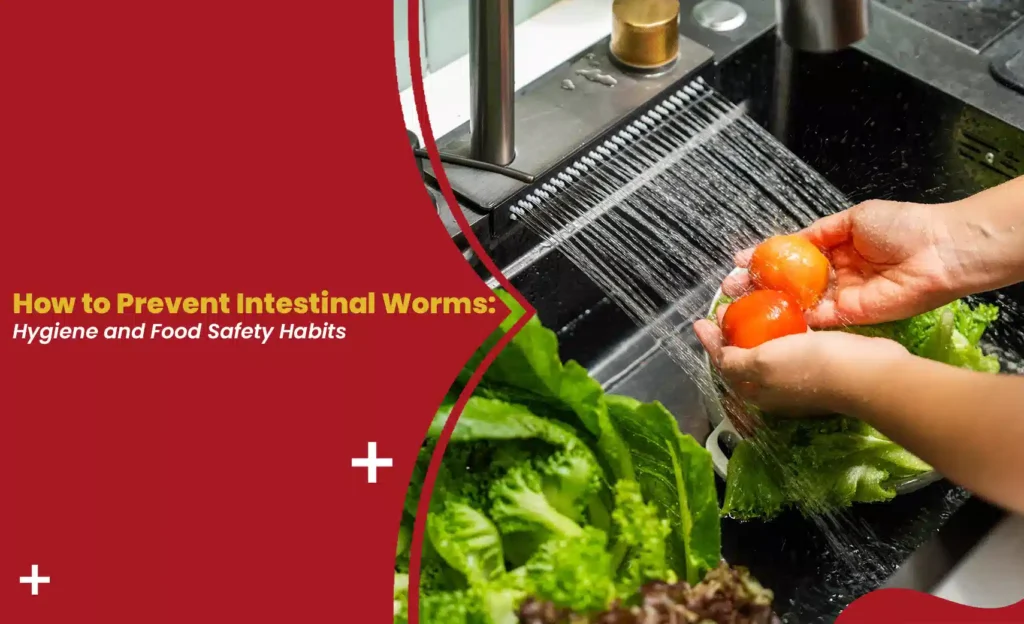
Washing tomatoes and lettuce under running water to prevent intestinal worms through hygiene and food safety

Intestinal worms affect hundreds of millions of people worldwide, but the good news is that a lot of infections are preventable if you keep a few steady habits. If you’re a parent stressing about your kids, a traveler headed into a high-risk area, or just someone trying to keep their digestive health more steady, learning how to prevent intestinal worms in humans really comes down to two big things: personal hygiene and food safety. This blog runs through practical, evidence-based ways to prevent intestinal parasites and lower your risk at home, at school, and when you’re on the road.  

What Are Intestinal Worms and How Do They Spread? 

Intestinal worms, also known as helminths, are parasites that hang out in the digestive tract and use nutrients from their host. You’ll hear about roundworms, hookworms, whipworms, tapeworms, and pinworms. Most of them spread through the fecal-oral route, so microscopic eggs or larvae travel from contaminated stool into soil, water, food, or surfaces, and then they get into someone else’s mouth, usually because hands weren’t washed properly or meals were contaminated. Hookworms are a little different. Their larvae can actually burrow through the skin if you walk around with bare feet. When you understand how transmission works, it becomes easier to see why prevention makes so much sense, because good habits are basically breaking one link in that chain.  

Hand Hygiene: Your First Line of Defense 

If there is one habit that helps the most, to avoid getting intestinal worms, it’s thorough handwashing. Use soap and clean running water for at least twenty seconds, after using the toilet, after changing diapers, before cooking or eating, and after dealing with pets, gardening, or just playing outside. Hand sanitizer can work as a backup when soap isn’t around, but it isn’t as dependable against parasite eggs, so soap and water are still the stronger option. These hygiene tips to prevent worms are pretty simple, free, and surprisingly powerful, especially for children, since they’re more likely to touch unwashed hands to their mouths.  

Food Safety and Parasite Prevention 

Food safety and parasite prevention walk together, because a lot of worm infections start right at the dinner table. Tapeworms are usually linked to eating undercooked beef, pork, or freshwater fish that contain larvae. Cooking meat to safe internal temperatures, and skipping raw or undercooked fish and meat where parasites are common, pretty much removes that risk. Freezing some fish the right way before you serve it raw can also reduce parasite chances. Keep raw meat away from foods you’ll eat right away, and use separate cutting boards and utensils so you don’t spread anything around your kitchen.  

Safe Drinking Water Matters 

Contaminated water is a major way parasites spread, especially where sanitation is limited. Drink water from treated or trusted sources, and while traveling, choose bottled, filtered, or boiled water. Boiling water for at least one minute is one of the most reliable methods for making it safe. Avoid ice cubes made from untreated water, and be cautious with raw produce that isn’t peeled and was washed with local tap water. These are key precautions if you’re trying to know how to avoid getting intestinal worms while traveling.  

Albendazole 400 mg tablet packs with the headline “Albendazole, Broadest Spectrum Anthelmintic” and a “Buy Now” button.

Protect Your Feet and Your Skin   

Hookworm larvae prefer warm, moist soil that’s contaminated with feces, and they enter the body through the skin, most often through the feet. Wearing shoes or sandals when you’re outdoors, especially where sanitation is poor, is a straightforward barrier that works really well. Try not to sit or lie directly on soil in those areas, and wash your feet after you’re done outside. Gardeners should wear gloves and then wash up well afterward.  

How to Prevent Pinworms in Humans 

Pinworms are the most common intestinal worm infection in children in many countries, and they spread fast in households, schools, and daycare centers. If you want to know how to prevent pinworms in humans, you focus on habits that interrupt the life cycle. Female pinworms lay eggs around the anus at night, which causes itching. Then scratching can move those eggs to fingers, bedding, and other surfaces. To prevent spreading, keep fingernails short and discourage nail biting and thumb sucking. Wash hands right after using the toilet, and again before meals. 

Pet and Animal Safety 

Dogs and cats can carry roundworms and hookworms that sometimes infect humans, especially kids who play in sandboxes or parks where animals may defecate. Keep pets on a regular veterinary deworming plan, clean up pet waste quickly, and cover sandboxes when they’re not being used. Wash hands after handling animals, and discourage children from kissing pets on the face or letting pets lick any open cuts.

Community Habits That Make a Difference 

Prevention is not just about one person or one household; it goes past that a bit. Using the right toilets and sanitation facilities, disposing of waste safely, and not using untreated human waste as fertilizer reduces environmental contamination. In a lot of places, health authorities run periodic deworming programs for school-age children in high-risk areas, and that can lower infection levels and also slow how eggs spread around the community. Getting involved and supporting those efforts is one of the most powerful public health tools you can have.

Getting Rid of Intestinal Worms Naturally: What Is Realistic? 

Many people look for methods for getting rid of intestinal worms naturally, often thinking foods or some herb will handle it by itself. Here’s the straight answer: a nutritious diet really can help general gut health and immune function, but there is no solid scientific evidence that papaya seeds, garlic, pumpkin seeds, or “herbal cleanses” will clear a worm infection that’s already established. Natural habits, like good hygiene, safe food handling, and eating in a balanced way, help with intestinal worms prevention. But if an infection is confirmed, it usually needs antiparasitic medication, and that should be prescribed by a healthcare provider, based on the specific worm type. If treatment is delayed, you can end up with anemia, malnutrition, and digestive problems, especially for kids.

Medical Option

Intestinal worms prevention works best when you catch things early, not late. Intestinal worm symptoms can include stomach pain, bloating, diarrhea, unexplained weight loss, fatigue, anal itching, and in some cases visible worms in stool. Some people have no symptoms at all. If you notice digestive issues that don’t go away, or you recently traveled to a higher-risk area, or you strongly suspect a household member has pinworms, it’s smart to see a healthcare provider. A simple stool test can figure out what parasite is there and point you toward the correct treatment. Albendazole is the active ingredient of Aldol 400 mg. This medication works by starving the worms. Aldol 400 mg prevents worms to absorb glucose from their hosts’ bodies. This causes them to become immobile and eventually die because they cannot get their energy source. Your body naturally eliminates them. Albendazole works effectively against both adult worms and their larvae.

Summing Up

Keeping intestinal worms away comes down to a few dependable routines: wash your hands often, cook food all the way through, wash produce well, drink safe water, wear shoes in higher-risk areas, keep pets dewormed, and keep sleeping spaces and living areas clean. None of this is overly complicated, but if you do it consistently, it can seriously cut your risk and protect your family’s health. And if you think an infection might be going on, skip the guessing and talk with a healthcare provider for proper diagnosis and treatment.

FAQs

1. How will you prevent pinworm infections?

Wash bedding, towels, and sleepwear in hot water, and vacuum or damp-clean bedrooms often, since eggs can live on surfaces for about two weeks. Because pinworms spread so easily between family members, healthcare providers often recommend that everyone in the household be treated at the same time if one person is diagnosed.  

2. Do fruits and vegetables spread worm infections?

Yes, fruits and vegetables are grown in soil that might have been fertilized with untreated waste. Wash all raw produce under running water, scrub sturdier stuff like carrots and potatoes, and peel when it makes sense. 

3. What are the symptoms of intestinal worm infection?

Intestinal worm symptoms are pain in the stomach, bloating, diarrhea, unexplained weight loss, fatigue, and anal itching.

4. What are the types of intestinal worms?

These are roundworms, hookworms, whipworms, tapeworms, and pinworms.

5. Are there any food restrictions with Aldol 400 mg?

There are no major food restrictions. But the patient has an allergy in any food, so he/she does not consume that food while taking this medication.
Scroll to Top