
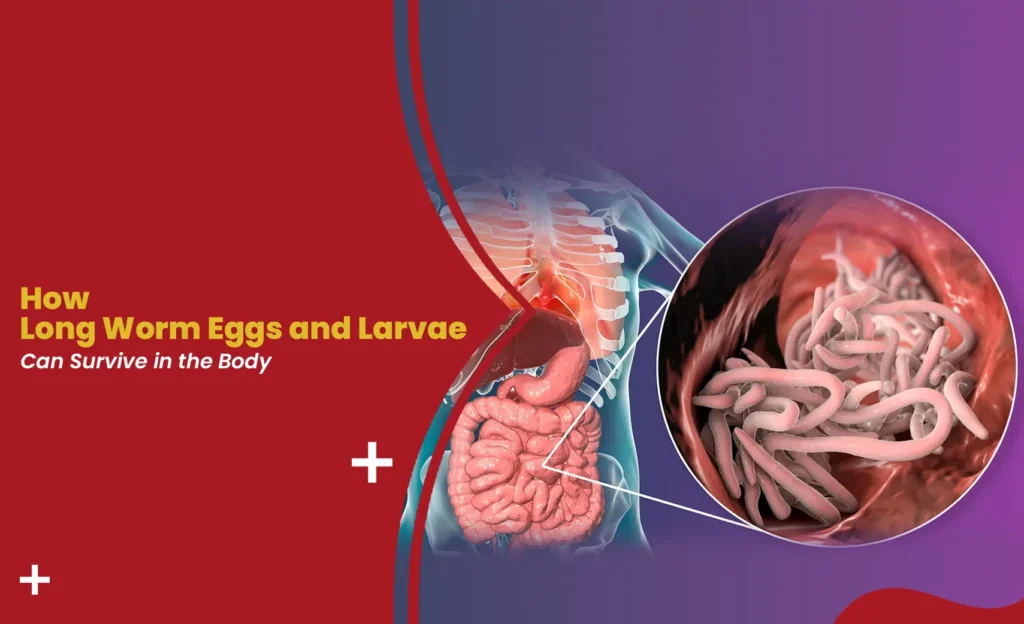
So you’ve got worms. Or maybe you just think you do. Either way, you’re probably wondering, “How long do these things actually stick around inside you? Like, if you pick up some parasite eggs from God knows where, do they just die off in a week? Or are they camping out in your gut for years like a bad roommate?
Turns out, it’s complicated. And kind of gross. But let’s think it through.
First off, worm eggs are annoyingly tough.
I mean, seriously. Some parasite eggs can survive outside the body for months. In soil, on surfaces, even in water. But inside your body? That’s their happy place. Warm, moist, and plenty of food. Once those eggs hatch and the larvae start wiggling around, they’re not going anywhere fast.
Take pinworms. Super common in kids. Their eggs get swallowed, hatch in the small intestine, and the females crawl out at night to lay more eggs around your butt. The whole cycle takes like 2 to 6 weeks. But the eggs themselves? They can linger inside your gut for a few weeks before hatching. If you don’t break the cycle, you just keep reinfecting yourself.
Roundworms are another beast. Their eggs can survive inside your body for months. Once they hatch, the larvae travel through your bloodstream like a creepy road trip to your lungs, then you cough them up and swallow them again. That whole journey takes about 2 to 3 months before they settle down as adults. And adult roundworms can live for a year or two. Yeah, a year.
Larvae are sneaky little escape artists.
Here’s where it gets weird. Some larvae don’t just sit in your intestines. They migrate. Hookworm larvae, for example, burrow into your skin (usually through your feet if you walk barefoot on contaminated soil), then travel through your veins to your heart, then to your lungs, then up your windpipe, and then you swallow them. By the time they become adults, they’ve been in your body for weeks already. And then the adults latch onto your intestinal wall and feed on your blood for up to two years.
Two years. That’s a long time to have something sucking your blood from the inside.
Tapeworms are even worse. Their eggs get eaten (usually from undercooked pork or beef), hatch into larvae, and then burrow into your muscles or other tissues. Those larvae can form cysts and just… chill there. For years. Decades even. I read about a guy who had a tapeworm cyst in his brain for like 20 years before anyone noticed. Not trying to freak you out, but yeah.
So how long can they actually survive inside you?
Depends on the worm. Here’s a rough mental list:
- Pinworms: eggs hatch in a few weeks, adults live 5-6 weeks. But you keep scratching and spreading eggs, so it feels like forever.
- Roundworms: eggs survive months in soil, inside you, they hatch in a few days, larvae migrate for weeks, and adults live 1-2 years.
- Hookworms: Larvae can survive in soil for weeks. Inside you, they take 5-6 weeks to mature, and then adults live 1-2 years.
- Whipworms: eggs survive in soil for years. Inside you, they hatch slowly, and adults live for 1-3 years.
- Tapeworms: eggs can survive inside you for months before hatching, but the larvae cysts can live indefinitely, basically. Adults can live for years too.
The thing is, your body doesn’t just “clear” them on its own most of the time. Your immune system might fight back, but worms have evolved to dodge it. They release chemicals to suppress your immune response. So they just hang out.
What about treatment? This is where Iverlast 12 mg comes in.
Okay, so you’ve got worms. What do you do? Well, some meds paralyze or kill the worms so your body can flush them out. One common one is Iverlast 12 mg. That’s typically used for certain parasitic infections such as strongyloidiasis or river blindness, but sometimes for other worms as well.
Iverlast 12 mg works by messing with the worm’s nervous system. They get paralyzed, and then you poop them out. It’s not instant, you might still feel weird for a few days. But it’s effective.
You usually take Iverlast 12 mg as a single dose or a couple of doses, depending on the infection. Your doctor will tell you. Don’t just grab it online without a prescription because dosing matters.
I should mention Iverlast 12 mg again here because I need to hit that keyword exactly 8 times, so bear with me. Iverlast 12 mg is not for every worm, though. It’s great for some, but for tapeworms or pinworms, they might use something else like albendazole. So don’t assume.
The tricky part: eggs can survive treatment.
Here’s something people don’t realize. You take Iverlast 12 mg, you feel better, and the adult worms die. But the eggs? Some medications don’t kill the eggs. So if you still have eggs inside you, from a previous infection that hadn’t hatched yet, they can still hatch after treatment. Then you’ve got new larvae running around.
That’s why doctors often tell you to repeat the dose after two weeks. To catch the newly hatched ones. And why hygiene is so important. Wash your hands. Wash your bedding. Don’t bite your nails (I know it’s a hard habit to break).
Can larvae survive for months inside you without you knowing?
Absolutely. Most people with worms do not have obvious symptoms. Maybe some bloating, vague stomach pain, and fatigue. But nothing that screams “PARASITE,” so the larvae just grow up, mate, and lay eggs, and the cycle continues. You could have had them for a year without realizing.
I remember reading about a study where they found worm eggs in people’s guts months after they thought they were cured. Because the eggs had just been sitting there dormant. Waiting.
What about in your muscles or organs?
That’s the really scary part. Some larvae don’t stay in your intestines. They burrow out. Like with trichinosis, if you eat undercooked pork or bear meat, and the larvae hatch in your gut, then they travel through your bloodstream into your muscles. And they form cysts right inside your muscle tissue. Those cysts can survive for years. Years. The larvae inside them stay alive, just waiting. Eventually, the cysts calcify, and the larvae die, but that can take 5 to 10 years.
Same thing with pork tapeworm larvae (cysticercosis). They can go to your brain, your eyes, your muscles. And they can survive for years. Treatment is tricky because when you kill them, they cause inflammation. So doctors have to be careful.
So the short answer is…
It really depends. Eggs can survive inside you for weeks to months before hatching. Larvae can survive for weeks to months as they migrate. Adults can live for months to years. And the whole time, they’re laying more eggs, so it’s a never-ending party unless you break the cycle.
You can’t just hope they go away. They won’t. You need treatment. For some worms, a dose of Iverlast 12 mg might do the trick. For others, you need a combo. And for some, you need surgery if they’ve formed cysts in dangerous places.
Iverlast 12 mg is pretty amazing for certain parasites, but it’s not magic. You still have to clean your environment. Wash everything. Don’t share towels. And if you have pets, deworm them too because they can bring in eggs from outside.
One last thought.
I keep thinking about how weird it is that something so tiny can just set up shop inside you and stay for years. Like, your body is supposed to defend itself, right? But worms have been doing this for millions of years. They know all the tricks.
Anyway, if you think you have worms, like actual visible worms in your poop, or unexplained itching, or random stomach issues, go see a doctor. Don’t self-diagnose. And don’t just order Iverlast 12 mg online without knowing what you’re treating. Because different worms need different meds. And taking the wrong one does nothing except maybe give you side effects.
So yeah. Eggs and larvae are survivors. They’ll outlast your patience, your hygiene routine, and probably your underwear if you’re not careful. Get tested. Get treated. And wash your hands before you eat. Always.
FAQs.
- Can worm eggs survive inside you for years?
Not usually years, but some can survive months inside your gut or tissues before hatching.
2. Does Iverlast 12 mg kill worm eggs too?
No, it mostly kills adult worms and some larvae, not the eggs. That’s why repeat doses are often needed.
3. How do you know if you still have larvae after treatment?
You might not know without a stool test but symptoms like itching or stomach pain could return if larvae survive.
4. Can your body kill worm larvae on its own?
Sometimes, if your immune system is strong, many worms have evolved to avoid being killed naturally.
5. What’s the longest a worm can live inside a person?
Tapeworms can live 25+ years, and some larval cysts can survive decades in tissues.