
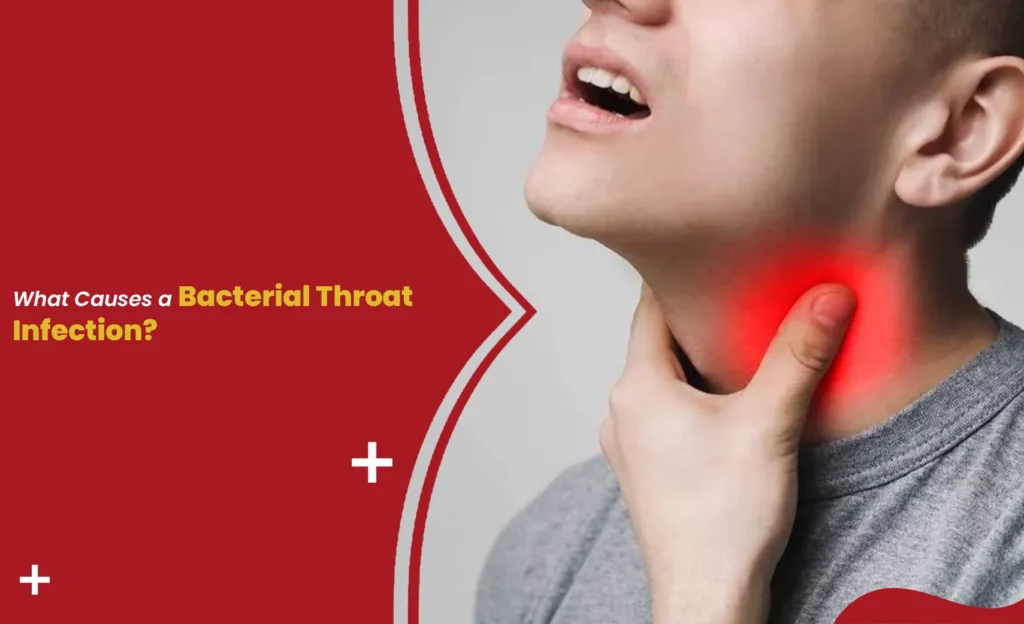
A sore throat is one of the most common reasons people visit a healthcare provider, yet only a minority of cases are caused by bacteria. Telling the difference matters, because a bacterial throat infection may need pharmacotherapy (pharmaceutical medication), while most others will clear on their own. This blog is going to share the causes, symptoms, and risks that help you respond sensibly rather than guess.
The Germs Behind the Pain
The causes of bacterial throat infection center on a handful of organisms, and the most important is group A streptococcus infection, which is responsible for strep throat. These bacteria live in the nose and throat and pass between people easily. Other bacteria, including group C and G streptococci, Arcanobacterium haemolyticum, and occasionally Mycoplasma or Chlamydia pneumoniae, can also be responsible. Strep throat causes are mostly straightforward: a person picks up the bacteria, they attach to the lining of the throat, and the immune system responds with swelling and pain. Throat inflammation caused by bacteria in the area looks red and feels raw.
How the Infection Moves From Person to Person
You have to understand how bacterial throat infections spread to explain why they sweep through classrooms and households. Contagious throat infections of this kind travel mainly through droplets released when an infected person coughs, sneezes, or talks. You can also catch them by touching a contaminated surface, such as a doorknob, toy, or shared cup, and then touching your mouth or nose. Sharing utensils and close contact speed things up. A person is most contagious while symptomatic, and they usually stop being infectious about 24 hours after starting appropriate antibiotics.
Who Is Most at Risk
Several risk factors for throat infections raise your odds. Crowded settings such as schools, daycare centers, dormitories, and military barracks are the biggest. Cold weather, which pushes people indoors, also plays a part, and strep activity peaks in late winter and early spring. If you have a weakened immune system, your throat infection can be exacerbated because of smoking, tobacco smoke, secondhand smoke, allergies, and poor sleep. Bacterial throat infection in children is very common in those who are between the age groups of 5 and 15 years. 20 to 30% of children are patients of sore throats, whereas only 5 to 15% of adults are infected by throat infections. Bacterial throat infection in adults is less frequent but still important, particularly in parents of young children and people who work with them.
Signs Of Bacterial Throat Infection
Bacterial throat infection symptoms are severe throat pain that comes on quickly. Moreover, Fever, often above 38°C (100.4°F), and swollen, tender lymph nodes in the neck are also signs of infection. Children experience headaches, nausea, or abdominal pain. In some cases, patients see red, swollen tonsils, or sometimes patches of pus. Strep throat symptoms lack the cough, runny nose, and hoarseness. In young children, the picture may be less clear, with irritability, poor appetite, and a fever being the main clues.
Tonsils Under Attack
Bacterial tonsillitis occurs when the tonsils themselves become infected. Swollen tonsils and throat infection often appear together, and the tonsils may look enlarged and bright red. One of the most recognized features is white spots on tonsils, which are patches of pus or exudate. They are suggestive but not proof of bacteria, since some viruses, including the one that causes glandular fever, can produce the same appearance. Difficulty swallowing due to throat infection is common because swollen tonsils narrow the passage, and swallowing becomes painful. Children may refuse food or drool, and this deserves prompt medical attention.
Bacterial or Viral: Telling Them Apart
The question of bacterial vs viral throat infection is a practical one, since antibiotics only work on bacteria. Viruses cause the majority of sore throat caused by bacteria lookalikes, particularly when a cough, runny nose, sneezing, or hoarse voice is present. Bacteria are more likely when there is fever, no cough, swollen neck glands, and tonsillar pus. Because symptoms overlap, you cannot reliably tell them apart at home, and even healthcare providers use scoring systems and tests to decide.
Getting a Firm Diagnosis
Bacterial throat infection diagnosis typically involves a clinical examination followed by a rapid strep test, which gives a result in minutes by detecting streptococcal antigens on a throat swab. If the rapid test is negative in a child or teenager, a throat culture is often sent to confirm, since it is more sensitive. In adults, a negative rapid test is often accepted. Testing avoids unnecessary antibiotic use, which helps limit resistance.
Treating the Infection
Bacterial throat infection treatment centers on antibiotics, alongside rest, fluids, and pain relief with paracetamol or ibuprofen. Patients feel comfortable after doing warm salt water gargles and throat lozenges. In severe conditions, antibiotics are recommended by the healthcare providers. Antibiotics for bacterial throat infections reduce to spread infections, and resolve serious complications.
A Targeted Option
Cipmox 250 mg is a pharmaceutical medication. Its active ingredient is amoxycillin. This is a penicillin-type antibiotic that damages bacteria’s cell walls. As a result, bacteria cannot survive at their hosts’ bodies. This medicine is the first choice of strep throat treatment. Doses of this medication depend on patients’ health conditions. Cipmox 250 mg can be taken with or without food, though a meal may ease stomach upset. Common side effects include nausea, diarrhea, and a mild rash. It must not be used by anyone allergic to penicillin, and swelling of the face, wheezing, or a severe rash needs emergency care. Never take leftover antibiotics or share them, and never use them for a viral sore throat.
When Throat Infections Keep Coming Back
Recurrent bacterial throat infections, generally defined as seven or more episodes in a year, five a year for two years, or three a year for three years, deserve specialist review. Possible causes include reinfection from a household carrier, incomplete treatment, or chronic tonsil problems. An ear, nose, and throat specialist may discuss tonsillectomy in selected cases.
What Happens If It Goes Untreated
Complications of strep throat can be serious. Local problems include peritonsillar abscess, sinus and ear infections, and spread to neck tissues. Immune-related complications include rheumatic fever, which can permanently damage heart valves, and post-streptococcal glomerulonephritis, a kidney inflammation.
Staying One Step Ahead
Hygiene and self-care are used for preventing bacterial throat infections. You have to wash your hands with soap before eating or touching your eyes or mouths. You should avoid sharing cups and utensils. You have to cover your face and mouth while coughing, sneezing, or from tobacco smoke. You have to replace toothbrushes after recovering from infection and do not use others’ used toothbrushes. Please remember, you keep your children at home until they become fever-free or at least 24 hours after completing their antibiotic doses.
When to Get Medical Help
Know when to see a healthcare provider for a sore throat. Seek care if pain is severe, if it lasts longer than a week, if there is a fever above 38.3°C, if there is pus on the tonsils, or if there is a rash. Seek urgent help for difficulty breathing, drooling, inability to swallow, a muffled voice, or neck stiffness.
The Bottom Line
A bacterial throat infection is common, contagious, and highly treatable when identified early. With proper testing, an appropriate antibiotic such as Cipmox 250 mg when prescribed, and sensible hygiene, most people recover fully within days and avoid complications.
FAQs
1. What is Cipmox 250 mg?
It is used to treat bacterial infections of the chest, ears, throat, sinuses, urinary tract and skin. This is also used to treat stomach ulcers.
2. What are the signs of a throat infection caused by bacteria?
The signs are severe throat pain, no cough or runny nose, fever, red and swollen tonsils, swollen lymph nodes, skin rash, and petechiae.
3. Can throat infection caused by bacteria cure on its own?
Yes, if it is a mild case. Sometimes, self-precautions (such as washing hands and covering your face and mouth while coughing, sneezing, etc.) and homemade remedies (such as hot water gargles) help to cure.
4. What kills bacteria in the throat fast?
Amoxicillin kills bacteria. This is a pharmaceutical medication.
5. What are the side effects of Amoxicillin?
The side effects are nausea, vomiting, diarrhea, mild skin rashes, and headaches.