
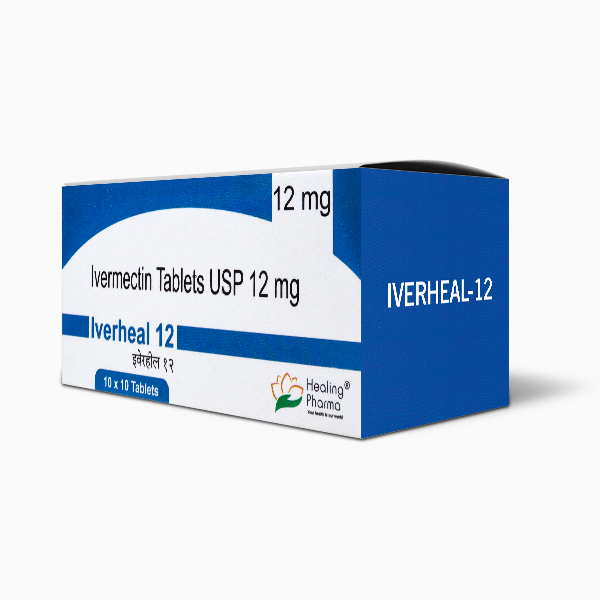
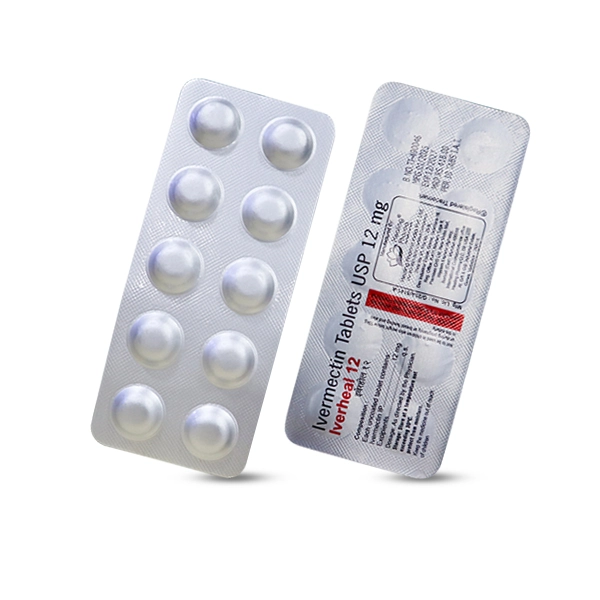
Overview: What is Iverheal 12 mg?
Ivermectin is the active ingredient of Iverheal 12 mg. This treats people who are suffering from intestinal strongyloidiasis and onchocerciasis. In addition, some topical forms of ivermectin are used to treat external worms (such as head lice) and for skin conditions (such as rosacea). It acts on the nervous system of parasites. Later, they paralyze and die. This antiparasitic medication also treats for scabies infections.
Key Features
| About Iverheal 12 mg |
| Drug Class: Anthelmintics and ectoparasiticides |
| Subclass: Avermectin derivatives |
| Product Details | |
| Composition | Active ingredient: Ivermectin
Inactive ingredients:
|
| Packaging Type | Blister |
| Pack Size | 10*10 |
| Dosage | 12 mg |
| Therapeutic Class | Anti-infectives / Antiparasitic agents |
| Action Class | Anti-infective/ectoparasiticide |
| Chemical Class | Macrocyclic lactone derivative (Avermectin) |
| Shelf Life | 2-3 years from the date of manufacturing |
| Usages | To treat parasitic infections |
| Storage |
|
How Does Iverheal 12 mg Work?
Iverheal 12 mg works by binding to glutamate-gated chloride channels in the nerve and muscle cells of worms. This raises the permeability of the cell membrane to chloride ions. This leads to hyperpolarization of the cells. They become paralyzed and die. It helps the body eliminate the infection effectively through feces and urine.
Side Effects
- Common side effects are:
- Diarrhea
- Nausea
- Dizziness
- Itching
- Fast heart rate
- Rash
- Severe dizziness
- Trouble breathing
- Serious side effects are:
- Headache
- Muscle pain
- Neck and back pain
- Swelling
- Chest pain
- Drowsiness
- Confusion
- Seizures
Usages
- Iverheal 12 mg treats infections caused by the intestinal roundworm Strongyloides stercoralis.
- This manages infections caused by the parasite Onchocerca volvulus, which can lead to severe eye and skin diseases.
- This also treats skin infestations caused by the mite Sarcoptes scabiei.
- This medicine is also used in the treatment of head lice, filariasis, cutaneous larva migrans, and mansonella infections.
Dosage
- The adult dose is 0.15 mg/kg orally once every 12 months.
- Dose is dependent on patients’ health condition.
- It is not recommended for children.
Interactions
- Major interaction
- Warfarin: There is a high chance of increasing the risk of bleeding.
- HIV protease inhibitors: May increase the risk of side effects.
- Cyclosporine: This may boost the risk of side effects.
- Moderate interaction
- Anticoagulants: May boost the risk of bleeding.
- Antiepileptic drugs: These reduce the effectiveness of Iverheal 12 mg.
- Immunosuppressants: May increase the risk of side effects.
- Drink interaction
- Reduce the efficiency and effectiveness of Iverheal 12 mg if you consume it with alcohol.
- Food interaction
- Iverheal 12 mg does not work properly with vitamins, supplements, and daily-use medicines (such as BP and high-sugar medicine).
- If you have an allergy to ivermectin, do not use this.
Pharmacokinetics
- Maximum blood levels: 4 hours
- Second concentration peak: 6 to 12 hours
- Use enterohepatic recycling
- Body distribution: Through tissues
- Food effect: Take on empty stomach
- Liver breakdown: Using the cytochrome P450 system (specifically CYP3A4)
- Half-life: Approximately 18 hour
- Elimination: Feces over several days
Safety Concern
- Alcohol: If it is necessary to take Iverheal 12 mg in such a situation, try to avoid alcohol.
- Driving: Avoid driving when you have taken this medicine.
- Stop supplements and herbal treatment before taking this medication.
- Immediately consult with a healthcare provider if you see side effects.
Precautions
- Pregnancy: Iverheal 3 mg may have a hazardous effect on the unborn baby. But if it is necessary to take this medicine, contact your healthcare provider, and he will guide you on taking this medicine.
- Breastfeeding: Because it may reduce the efficiency of milk in the body of women, hence, take this medicine or, if it’s necessary, make contact with your healthcare provider.
- Liver and heart issues: In case it is necessary to take Iverheal 3 mg, take it with caution and contact your healthcare provider first.
- Kidney: Even if you are suffering from kidney-related issues at present, do not ignore using Iverheal 3mg. If necessary, take this medicine with caution as per the recommendation of your healthcare provider.
Conclusion
Iverheal 12 mg helps you to cure your parasitic infection. It is administered orally along with a full glass of water. It is essential to follow the dosage and administration instructions provided by your healthcare provider. The medication should be taken on an empty stomach. It has fewer side effects. But these side effects do not happen to all users.
FAQs
1. What is Iverheal 12 mg?
It is an antiparasitic medication. It is effective against conditions such as onchocerciasis (river blindness), intestinal strongyloidiasis, and scabies.
2. How does ivermectin work?
It binds glutamate-gated chloride channels in the nerve and muscle cells of worms. Thus, they can not collect glucose from the hosts’ bodies. Then, they become weakened and die.
3. What is the dose of Iverheal 12 mg?
The adult dose is 0.15 mg/kg orally once every 12 months.
4. Do pregnant and breastfeeding women take Iverheal 12 mg?
No, pregnant and breastfeeding women cannot take it.
5. How to store Iverheal 12 mg?
You store it in a cool, dry place away from sunlight and moisture and at a temperature not exceeding 30°C.
Sophia Brown –
My parasitic infection constantly hampered my daily routine and sleep. Now I’m feeling better after taking this medicine.